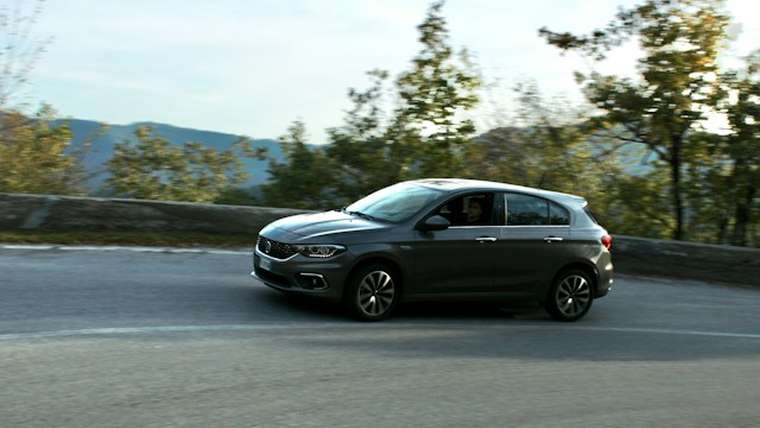
Here's a question worth sitting with before your next booking: when was the last time a rental car's build year actually changed your trip?
You booked a car for your trip, and somewhere in the back of your mind sits a quiet assumption: newer is better. A car fresh off the lot, zero kilometres on the clock, that showroom smell still hanging in the air. It feels like the safe choice.
But here's a question worth sitting with before your next booking: when was the last time a rental car's build year actually changed your trip?
The road didn't care. The GPS didn't care. The mountain view at the end of the drive certainly didn't care. What you paid for, though, was largely the idea of new — and that idea is one of the most expensive things you can rent.
Let's unpack why a slightly older car is often the smarter booking, and how to think about rental cars in a way that saves you money without asking you to compromise on anything that matters.
Modern cars are built to last far longer than you think
The engineering reality of the last two decades is that cars simply don't wear out the way they used to. A well-built modern car will comfortably cross 200,000 kilometres and keep going — often well beyond it — with nothing more than routine maintenance.
That's not an optimistic estimate. It's the baseline. Manufacturers design engines, transmissions, and drivetrains to survive years of daily commuting, motorway miles, and the occasional pothole that you'd rather forget. Materials have improved. Rust protection has improved. Electronics that once failed at 100,000 km now shrug off double that.
To put it in perspective: the average car covers roughly 15,000 km a year. A vehicle built to last 200,000+ km is engineered for well over a decade of ordinary use. So a car that's three or four years old hasn't reached middle age — it's barely out of its warranty-fresh youth.
The "expiration date" most of us imagine for a car is a holdover from an earlier era. Today's machines age far more gracefully than our instincts suggest.
Rental fleets retire cars while they're still in excellent shape
Here's something most travellers never see behind the counter: the majority of rental fleets cycle their cars out long before those cars are anywhere near worn out.
Fleet turnover is driven by accounting and logistics, not by the car's condition. Companies rotate vehicles on a fixed schedule to keep their fleets looking uniformly current and to manage depreciation on their books. A car that's been meticulously serviced, driven carefully, and kept in near-perfect condition still gets retired — simply because the calendar said so.
Which means a huge number of "used" rental and ex-lease cars enter their second life in genuinely excellent shape. Low-to-moderate mileage. Full service history. No mechanical reason at all to consider them past their prime. The only thing they've lost is the label "new."
That's a gap between reality and perception — and it's a gap you can turn into savings.
A well-maintained 2021 car is virtually indistinguishable from a new one
Picture two cars parked side by side. One rolled off the production line last month. The other is a carefully kept model from a few years back, fully serviced, clean, and ready to drive.
Sit inside both. Start the engines. Take them out on the road.
For the vast majority of drivers, the experience is the same. The steering feels the same. The brakes respond the same. The infotainment, the climate control, the seats, the ride — all effectively identical. A few years of automotive progress rarely produces a difference you'd actually notice on a weekend trip or an airport run.
The gap between a thoughtfully maintained recent car and a brand-new one is, in practical terms, almost invisible. What is very visible is the difference in what you pay for each.
You're paying for depreciation — not a better trip
This is the part worth reading twice.
New cars lose value the fastest in their earliest years. A significant chunk of a car's total lifetime value evaporates in the first stretch of its life — before it's done anything more remarkable than sit in a car park. That lost value doesn't disappear into thin air. Someone pays for it. And when you rent a brand-new car, a slice of that steep early depreciation is quietly baked into your daily rate.
So ask yourself honestly: what does that premium actually buy you? Not a smoother drive. Not a more reliable car. Not a better view at the end of the road. It buys you the number on the registration document — and very little else your trip will ever feel.
You're not paying for a better journey. You're paying to be the first person to absorb a car's fastest financial decline. When you frame it that way, insisting on brand-new starts to look less like a smart precaution and more like an expensive habit.
A smarter approach: carefully selected second-cycle cars
This is exactly the thinking behind Sigvi.
Instead of chasing the showroom premium, Sigvi builds its fleet around carefully selected second-cycle cars — vehicles in their next chapter of life, chosen precisely because they still drive beautifully and have plenty of road ahead of them. Each one is picked and maintained to deliver the experience that actually matters when you're behind the wheel, minus the invisible cost of newness.
The result is a rental that makes a lot more sense:
- Up to 40% cheaper than comparable cars from global brands — because you're not funding someone else's depreciation curve.
- A genuinely better drive. Many of these cars were originally bought by people for themselves, which means better packages and thoughtful extras — think leather seats, premium sound systems, adaptive cruise control, heated seats, panoramic roofs, and other comfort features you wouldn't expect at this price.
- An experience without the friction. No waiting in line, no paper contracts, and the confidence that you'll get exactly the car you reserved.
- Multiple pickup locations across the city, so you can collect your car close to where you actually are.
And there's a quieter benefit that comes for free. Giving a perfectly good car a second cycle instead of retiring it early is simply a more sensible use of something that already exists. It's sustainability that asks nothing of you — no compromise, no trade-off, just less waste as a natural side effect of a smarter choice.
The next time you book
Brand-new is a feeling, not a feature. Once you separate the two, the logic gets clear fast: modern cars last far longer than we assume, fleets retire them long before they're worn out, and a well-kept recent model drives just like a new one — for a lot less money.
The next time you book, you don't have to pay a premium for a badge you'll never feel on the road. You can pay for the drive itself.
That's the trip worth booking. And it's the one Sigvi was built to give you.
Need a car this week?
Pick a car, sign in seconds, unlock with your phone. No rental counters.